Framing Environmental Risk: Modeling the Process of Climate-Contingent Investment
Led by Scott Huettel (Duke University), Gavan Fitzsimons (Duke University), and Marcus Cunha (University of Georgia)
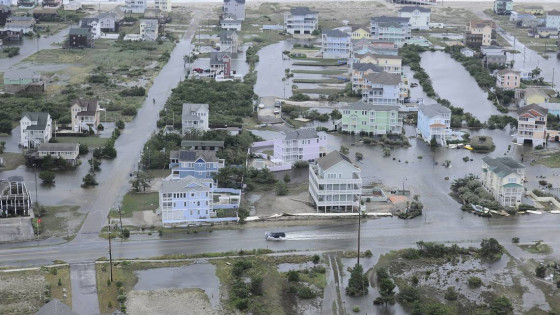
Environmental risks present challenges for investment, insurance, and resilience decisions. For home-owners, assessing these risks involves consideration of outcomes that are low-probability, catastrophic, and distant in the future – exactly the circumstances shown by research to be most likely to generate biases or errors in the decision process. Moreover, the complexity of risk assessments can lead consumers to delay choices, under-insure property, or forgo insurance entirely.
Our project brings decisions about environmental risks into a decision science laboratory, so that we can identify factors that shape consumer decisions about resilience and insurance. Our research team will ask consumers to evaluate environmental risk information about homes for sale in North Carolina and Georgia. After viewing each home, each consumer will choose between possible investments in the home that involve tradeoffs between building resilience or improving luxury. We will measure their attentional engagement using high-resolution eye-tracking, which in turn feeds into computational models of the decision process. Through this work, we seek to better understand consumers’ assessments of environmental risks so that we can develop messaging that overcomes cognitive biases in decision making.
Photo credit - Duke Today: https://today.duke.edu/2020/07/hurricane-covid