Climate-Driven Aging, Dynamic Vulnerability, and Economic Network Cost Evaluation
Led by Beshoy Morkos (University of Georgia), Andrew Johnson (Duke University), Sara Oliver (Duke University)
This project develops novel, AI-driven approaches to understand how roofs degrade over time and how that degradation, combined with changing climate conditions, drives damage, costs, and long-term risk. Current models used by insurers and planners treat buildings as static, meaning they assume a roof today behaves the same way years from now. This project challenges that assumption by generating new data and models that reveal how roofing materials weaken over time due to heat, sunlight, moisture, and repeated exposure to weather. These models translate physical aging into measurable changes in damage risk, providing a more accurate picture of how and when failures occur.
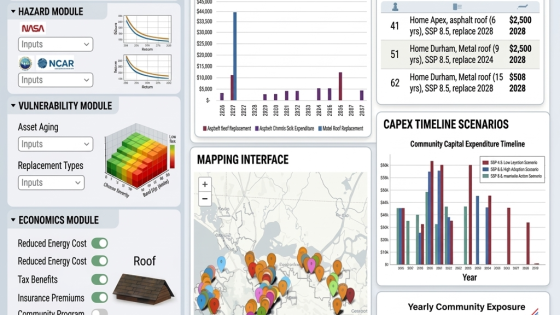
The project integrates this new knowledge into a simulation platform that tracks roofs over decades. It combines climate projections, material aging, and economic factors to model how individual homes, and entire communities, change over time. This enables analysis of when roof replacement or upgrades become cost-effective, how stronger materials alter long-term outcomes, and how risk accumulates if no action is taken. The impact extends beyond individual decisions, as the platform will allow insurers, governments, and industry to test policies such as rebates, insurance pricing changes, and resilience programs before implementing them. It will predict how these strategies may influence homeowner behavior, reduce losses, and improve the long-term insurability of communities.
By linking climate exposure, material degradation, and economic decision-making, this project produces new data, models, and tools that shift the focus from reacting to disasters toward actively reducing risk.